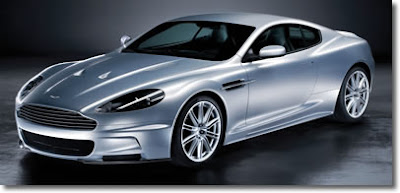
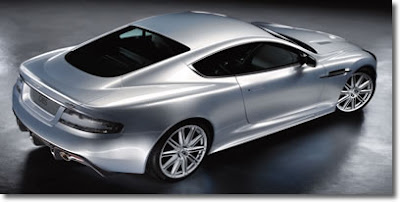
 Aston Martin Chief Executive Officer, Dr Ulrich Bez, said: “The DBS is the ultimate expression of Aston Martin’s engineering and technical ability. It offers pure performance without compromise. “The DBS delivers the complete driving experience and bridges the gap between our road and track cars – the DB9 and DBR9.”
Equally at home on a twisting mountain circuit as on the open road, the DBS is a true thoroughbred. The Aston Martin DBS is a 6.0-liter V12 powered, race-bred, two-seater shaped by the aerodynamic demands of high performance, with an exquisite interior that marries beautifully hand-finished materials with the very latest in performance technology.
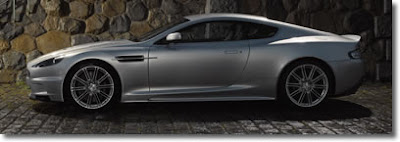 A combination of elegant design, innovative manufacturing processes, race-derived materials and components and Aston Martin’s unrivalled hand-build expertise makes the DBS a luxury sports car without equal. Every line, crease and curve conveys the enormous potential of the DBS, a seductive blend of refinement and raw power, provided by the hand-built V12 producing 510 bhp, a top speed of 191 mph and a 0-60 mph time of 4.1 seconds.
Performance
The need for high-performance stability, handling ability and low kerb weight defined the DBS’s form and construction. Accordingly, the DBS becomes the first production Aston Martin to make extensive use of ultra-light carbon-fiber body panels. High levels of performance and control are delivered by the combination of inherent light weight, near-perfect weight distribution, a supremely powerful and flexible V12 engine, and a performance-honed six-speed transmission, together with new carbon ceramic brakes and an adaptive damper controlled suspension system.
| Specifications | ||||||||||||||||||||||||||||||||||||
Base Price: $265,000
| | | ||||||||||||||||||||||||||||||||||
 At the heart of the DBS is a 6.0-liter V12 engine. As with all current Aston Martins, it is hand-assembled at Aston Martin’s dedicated engine facility in
 Design
The DBS is manufactured using the finest materials, with a combination of hand-finishing and pioneering high-technology processes. From the exceptional quality of the design and finish to the advanced production techniques employed to save weight and create strength, the DBS is both a technological masterpiece and a powerful visual and tactile experience, inside and out.
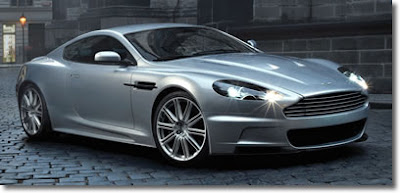 The external detailing reflects the power and dynamic abilities of the DBS, with revised inlets and enlarged grilles that deliver more air into the engine and increase its cooling capacity. Subtle design details include a new five-bar design for the polished alloy main grille, as well as two additional vents in the enlarged power bulge on the carbon-fiber bonnet. These vents are entirely functional, improving engine performance and efficiency, yet also communicating the increased power output of the uprated V12 engine.
The DBS’s aerodynamic enhancements are shaped by Aston Martin’s racing experience. A carbon-fiber splitter and a new front bumper design help channel airflow around the car’s wider bodywork. The aerodynamics team worked hand in hand with the modeling team to ensure that the forms and surfaces of DBS were sculpted for inherent stability at high speeds.
Interior
The interior of the DBS represents the epitome of Aston Martin’s commitment to using materials honestly, without disguise or embellishment. Lightweight materials are used throughout to save weight; door pulls are made from carbon-fiber, for example, and the carpet has been woven with lighter fibers to save weight. Special semi-aniline leather is used throughout the cabin, saving weight as well as giving a soft feel and distinctive aroma.
 As an option the DBS may be equipped with specially developed lightweight seats (outside
 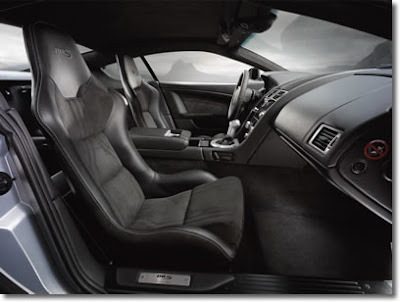 The start sequence of the DBS is augmented by an all-new centre console design with a cast metal surround, crisp typography and new graphics. The new console has a traditional dial-face clock at the centre, flanked by two rotary controls for the heating and air-conditioning system, fashioned from solid, turned aluminum.



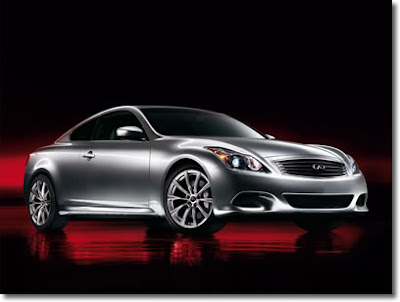 Developed at test circuits throughout Europe - including the famed Nürburgring - the G37 Coupe was conceived as a performance thoroughbred. Handling and ride performance increases come from the G37 Coupe's enhanced FM (Front Mid-ship) platform, which has been stiffened 36% from the previous generation, is lower in overall height and has a wider front and rear track width.
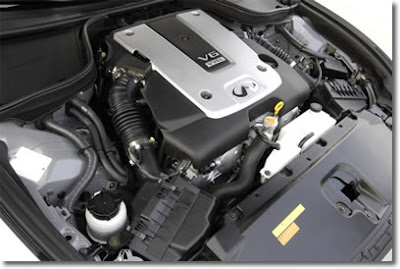 A new, specially tuned dual exhaust system has been designed with equal length exhaust manifolds and low muffler exhaust backpressure to help improve engine breathing. Both intake and exhaust enhance driving pleasure with their authentic performance notes.
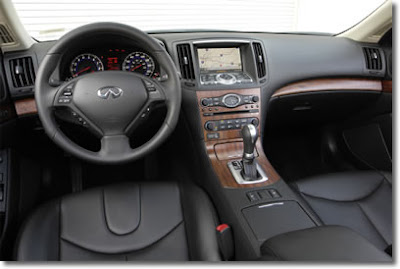 The 8-way power driver and 4-way front passenger seats (8-way on G37 Coupe Journey, G37 Coupe Journey with Sport Package and G37 Coupe Sport 6MT model) are appointed with Infiniti's exclusive premium leather and feature 2-way adjustable head restraints and a unique rear-seat access system, whereby the front seats will move forward automatically at the touch of a button to allow passengers into the rear seat.
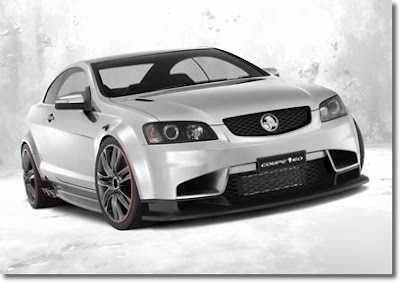
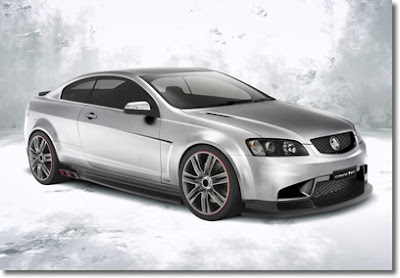 Exemplifying sports luxury, Coupe 60 is a pillarless concept car that explores the limits of Holden's current rear-wheel drive capabilities, combining racing looks and technology into a road going sport scar experience. Its sophisticated appearance is delivered through simple and powerful design, highlighted by the pillarless construction and V8 super car inspired cockpit layout and side-exiting chambered exhaust system with billet alloy tips.
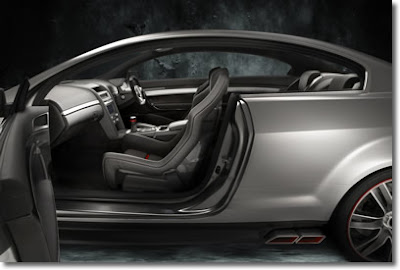 The interior also has several unique features. They include one piece carbon fiber bucket seats (featuring leather and suede pad design) and a sports-inspired flat bottomed steering wheel with integrated shift light display and LCD sports instrument cluster. The high gloss carbon fiber carries through to doors and rear trim providing a contrast to the leather trimmed instrument panel and black suede trimmed pillars, headliners and parcel shelf.
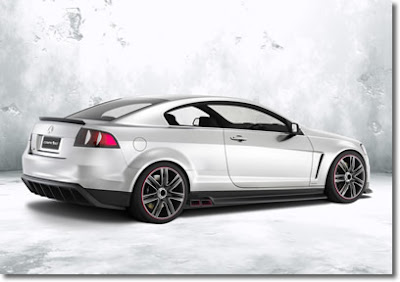 Details and accents are picked out with a distinctive red high shine leather on the seats and dark gunmetal finish and satin chrome on the consoles and doors.Front seats are adjustable fore and aft to allow easy access to the rear, with four-point race harness restraints for all seating positions. Under the bonnet is just as forward looking, with a 6.0 liter V8 engine incorporating the latest technologies such as active fuel management and calibrated for E85 ethanol fuel. Even the paint is a one-off. Called 'Diamond Silver' by Holden designers, it gives a liquid aluminium finish that almost slides off the bodywork.
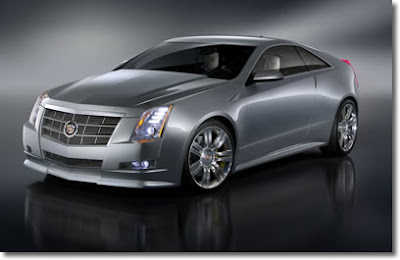 Having earned critical acclaim, industry awards and brisk sales, Cadillac CTS has moved into the vanguard of contemporary design. In doing so, Cadillac designers faced the question of what to do next. Their answer celebrates that design legacy with the exhilarating Cadillac CTS Coupe Concept, which premiered at the 2008 North American International Auto Show.
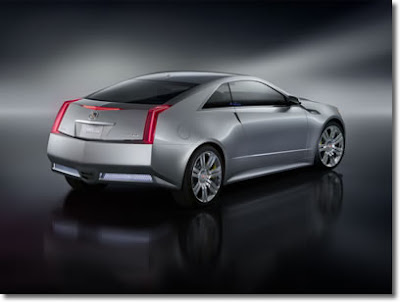 "The diamond-cut elements enhance the sleek profile of the car," said John Manoogian II, director of exterior design for Cadillac. "The CTS Coupe uses the elements, along with other nods to classic Cadillac cues - such as vertical headlamps and taillamps - to acknowledge the brand's heritage without resorting to nostalgia. It is a forward-looking design in every sense of the term."
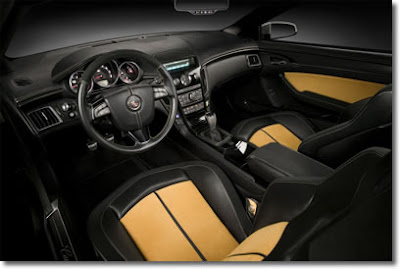 Custom-trimmed sport seats from Recaro are located in all four positions. They support the grand-touring nature of the car and are covered in rich, black and suede-like microfiber material, with yellow ochre-colored inserts. The yellow ochre color provides dramatic contrast with the black surrounding trim, but is a subdued hue consistent with the interior's overall feeling of refinement. Yellow ochre stitching also is used throughout, including the seats, instrument panel, shifter knob and more.
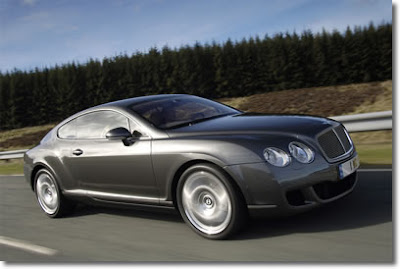
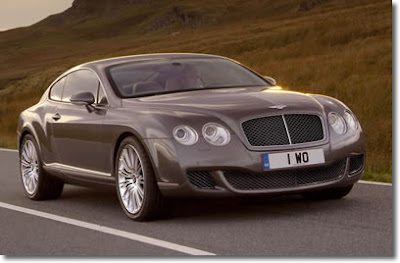 The Continental GT Speed is the most powerful production Bentley ever and the first to top 200 mph. A potent addition to the company's highly successful Continental series, the GT Speed extends the appeal of the Continental GT coupe to driving enthusiasts who place a high value on outright performance and agile handling.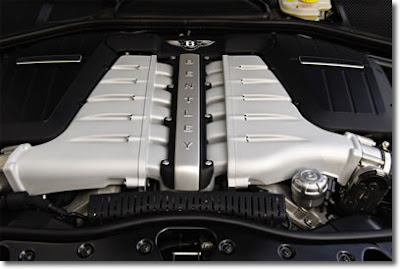
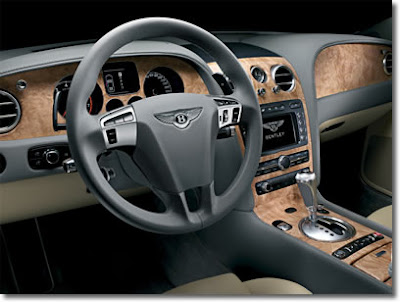 The GT Speed's cabin is based on that of the Mulliner Driving Specification (a cost option on the standard GT). It includes a choice of veneers (Burr Walnut, Dark Stained Burr Walnut and Piano Black), Diamond-quilted hide seats with embroidered Bentley emblem, indented hide headlining, a sports alloy gearlever, three-spoke multi-function sports steering wheel, drilled alloy foot-pedals as well as 'Speed' logos to the treadplates.
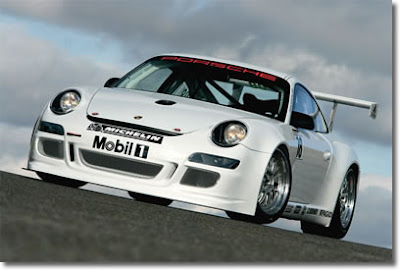
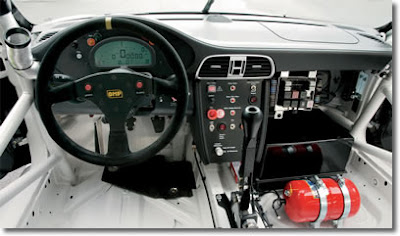
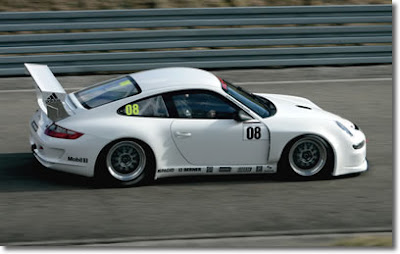 In contrast to the GT3 Cup, the body of the Cup S is not based on the road-going GT3 but on the GT3 RS. In the wider wheel arches, considerably larger wheels can now be mounted. At the front, the rims measure 10.5 inches in width with 12 inch wheels fitted at the rear. The front section and flares are significantly different to the GT3 Cup components. An adjustable front-splitter generates more downforce at the front axle. The rear-wing is wider and positioned higher than the Cup version and provides more downforce at the rear axle.
 Several suspension components for the GT3 Cup S have been taken from the more powerful GT3 RSR which races in the GT2 class at international long-distance championships. The braking system of the GT3 Cup S was adjusted to the increased power compared to the GT3 Cup. At the rear the diameter of the brake discs has grown by five millimeters to now measure 355mm.