Showing posts with label 2009. Show all posts

2009 Audi R8


Audi unveiled the R8 - its first ever mid-engine sports cars -- for the 2008 model year. Sales began in the first half of 2007 for the United States and Europe.


The car has a 420 horsepower high-revving V8 engine and all-wheel-drive. It uses the mid-engine Lamborghini Gallardo platform, and will somewhere between $80,000 and $110,000 - positioning it squarely against the BMW M6, Porsche 911, and Aston Martin Vantage.


It features a choice of LED or Xenon headlamps surrounded by LED running lights and indicators. LEDs are also used in the engine bay to make the impressive V8 visible even at night.


Both a standard manual and an automated manual transmission will be offered. Claimed 0 to 62 mph time is 4.6 seconds, though this number is likely conservative.

Interior

The interior has a driver-oriented cockpit architecture, integrating the driver between the dashboard and the high centre console. The instrument panel above the console is angled slightly towards the driver. The flat-bottomed steering wheel is a typical feature of the sportiest Audi models, and also enables comfortable sports car entry and exit.


The sports seats are trimmed as standard in a Leather/Alcantara combination, or optionally in full leather. Alternatively, the R8 can also be fitted with bucket seats, specially developed by quattro GmbH. There is plenty of room for the two occupants, with comfort levels well beyond the norm of high-performance sports cars. There is space behind the seats to stow large bags, or even two golf bags. The luggage compartment at the front has a capacity of 100 litres.


With numerous trim variants and applications in Piano finish or Carbon sigma, there are few limits to the range of customisation options for the interior.

The drivetrain

At 7,800 rpm the 4.2-litre engine delivers 309 kW (420 bhp) of power output. Peak torque is 430 Newton-metres from 4.500 to 6,000 rpm. And no less than 90 per cent of this maximum torque is maintained consistently throughout a wide engine speed range from 3,500 all the way to 7,600 rpm. As a result of these qualities, the eight-cylinder power unit provides ample thrust in most driving situation.
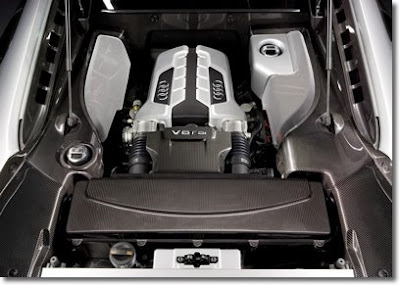

The engine is a high-revving unit. The maximum engine speed is 8,250 rpm. Two transmissions are available: a manual 6-speed gearbox or optionally the Audi R tronic sequential-shift gearbox, with a joystick gear-shift on the centre console and, most especially, the paddles mounted on the steering wheel. 'Shift by wire' technology provides for very fast gear-shifting and an outstanding power-to-weight ratio, allied to compact gearbox dimensions. The Sport mode, with its fast shifting, guarantees the absolute maximum in terms of driving fun. An automatic mode can also be selected.

The car is fitted with permanent four-wheel drive, which distributes the power variably to the front and rear axles by way of a viscous clutch. On the Audi R8 the legendary quattro system is adapted to the axle load distribution typical of mid-engined cars.


The chassis

The chassis features forged aluminium double wishbones at the front and rear. At the front they are triangulated, while at the rear the top one is triangulated and the bottom one is a triangulated wishbone with a track rod. This provides for optimum wheel control, and is a geometry which has proved itself to be the ideal solution in delivering agility, maximum steering precision and precisely defined self-steering characteristics.
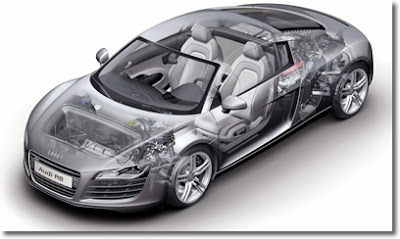

Direct, hydraulic rack-and-pinion steering provides optimum feedback to assist the driver.

The spring and damper set-up is stiff in order to deliver maximum driving dynamics, while still providing a quite astonishing level of ride comfort. This is particularly true when the 'Audi magnetic ride' adaptive damper system is chosen as an alternative to the standard gas-filled shock absorbers.

Instead of the conventional damper fluid, a magnetorheological fluid is used -- in other words, a fluid whose viscosity can be influenced by an electromagnetic field. This effect enables the damping characteristic to be influenced electronically at will and instantaneously, by applying a voltage to the electromagnets.

Audi magnetic ride uses this property to deliver the correct damping forces in every driving situation. A computer determines the prevailing driving situation in a matter of milliseconds. Drivers can choose from two driving programs depending on whether they want to drive in a highly sporty style -- with the magnetorheological fluid adjusted to a low viscosity -- or with the emphasis more on ride comfort.
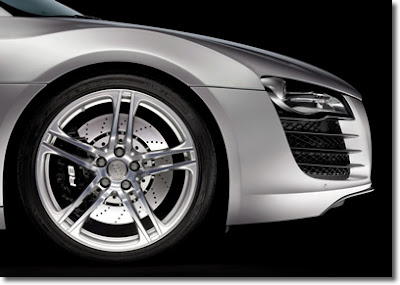
The Audi R8 is fitted with 6-arm 18-inch wheels as standard, and can optionally be ordered with 19-inch wheels. The 235/40 size tyres at the front and up to 285/35 at the rear provide the necessary road-holding. The mid-engined sports car's long wheelbase and extremely low centre of gravity ensure that it always retains maximum stability.

Equipment and trim

Xenon plus lights, LED rear lights and daytime running lights, 18-inch aluminium wheels, an audio system with 7-inch monitor, an anti-theft alarm and Leather/Alcantara interior trim are just some of the items on the extensive list of standard features.


The range of optional extras includes a Bang & Olufsen sound system, featuring an output of 465 watts and 12 specially designed speakers. A microphone-based vehicle noise compensation system adjusts audio levels to changing road conditions and speeds.

The acoustic parking system and a rear-view camera help the driver to manoeuvre into even the tightest of spaces. The radio/navigation system plus, featuring a large-format colour monitor and MMI keypad, combines extensive functionality with extreme user-friendliness.

A total of eight exterior colours are available, from Ibis White to Phantom Black, pearl effect.

Craftsmanship

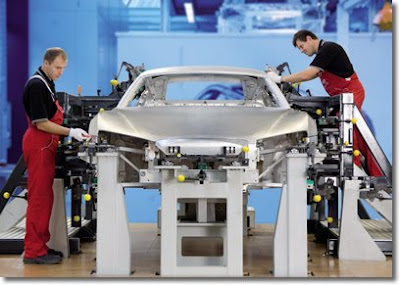
The Audi R8 is being built on a small-lot production line in a specially constructed new block at the Audi plant in Neckarsulm. The entire production process - from the bodyshell construction to final assembly - is organized in the same way as a craft workshop. Small teams of specialists accompany every step of production, ensuring that every one of the maximum of 15 cars per day built is up to quality standards.
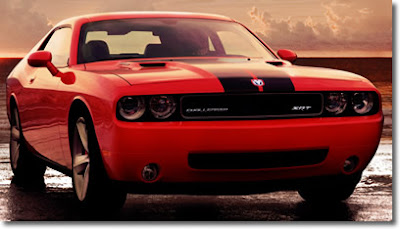
2009 Dodge Challenger-SRT8


Dodge announced pricing today for the all-new 2009 Dodge Challenger. The U.S. Manufacturer's Suggested Retail Price (MSRP) will start at $21,995, which includes $675 for destination. Dodge dealers across the country are now taking orders for the 2009 Dodge Challenger, which will arrive this fall.

"The all-new 2009 Dodge Challenger gives customers a modern-day muscle machine at an incredible value," said Mike Accavitti, Director - Dodge Brand and SRT Global Marketing, Chrysler LLC. "For less than $22,000, we've brought Dodge Challenger back and loaded it with head-snapping styling and cutting- edge technology."

The Dodge Challenger is the first five-passenger two-door coupe produced from the Company's proven rear-wheel-drive platform that delivers the Dodge Charger and Chrysler 300. Developed with Dodge's credo of "bold, powerful and capable," the 2009 Dodge Challenger is available in three models featuring head-turning styling, three available engine options and an automatic or manual transmission.

The 2009 Dodge Challenger has several modern amenities available including uconnect gps with navigation system and real-time traffic, uconnect phone featuring Bluetooth(R) technology, uconnect studios with SIRIUS Satellite Radio, Remote Start and Keyless Go push-button start. In addition, the Dodge Challenger has more than 25 safety and security features including supplemental side-curtain air bags, Anti-lock Brake System (ABS), Electronic Stability Program (ESP), Brake Assist, Traction Control, automatic headlamps, tire pressure monitoring and Hill-Start Assist in Dodge Challengers with the six-speed manual transmission.

Three models are available in the United States: Dodge Challenger SE, Dodge Challenger R/T and Dodge Challenger SRT8(R).

2009 Dodge Challenger SE

With a U.S. MSRP of $21,995 (including $675 destination), the Dodge Challenger SE comes standard with a 3.5-liter High Output V-6 engine which produces 250 horsepower (186 kW) and 250 lb.-ft. (339 N*m) of torque. Mated with a four-speed automatic transmission, the Dodge Challenger SE achieves an estimated 18 miles per gallon (mpg) in the city and 25 mpg on the highway.

Other standard features on Dodge Challenger SE include comfortable seating for up to five adults, best-in-class cargo space (16.2 cu. ft.), 60/40 split-folding rear bench with arm rests and two cup holders, 17-inch aluminum wheels with P215/65R17 all-season tires, four-wheel disc brakes, side-curtain airbags, remote keyless entry, eight-way power driver's seat, fold-away power mirrors, power locks and windows with express-down, air conditioning, AM/FM/CD radio with MP3 capability and four speakers, cloth low-back bucket seats, manual-tilt and telescoping steering wheel, dual-covered visor vanity mirrors and tire pressure warning lamp.
2009 Dodge Challenger R/T

The U.S. MSRP for the all-new 2009 Dodge Challenger R/T is $29,995. Featuring the new-generation 5.7-liter HEMI V-8 engine, the Dodge Challenger R/T produces an estimated 370 horsepower (276 kW) and 398 lb.-ft. (540 N*m) of torque when paired with the standard five-speed automatic transmission. The 5.7-liter HEMI engine with five-speed automatic transmission is equipped with fuel-saving multi-displacement (MDS) technology which increases fuel economy by as much as 20 percent without sacrificing performance.

Other standard features on the 2009 Dodge Challenger R/T include dual chromed rectangular exhaust tips, ABS, ESP, Brake Assist with vented brakes, 18-inch machined aluminum wheels with P225/60HR18 all-season touring tires, fog lamps, body-color exterior mirrors, leather-wrapped steering wheel and shift knob, illuminated visor vanity mirrors, rear body-color spoiler and cast-metal fuel door. The available Track Pak features the Tremec TR-6060 six-speed manual transmission with "pistol-grip" shifter for $995. When the six-speed manual transmission is pai

red with the 5.7-liter HEMI V-8, it produces an estimated 375 horsepower (280 kW) and 404 lb.-ft. (548 N*m) of torque. The Track Pak also includes Hill-start Assist, limited-slip differential, bright pedal covers and performance steering.

Dodge Challenger SRT8

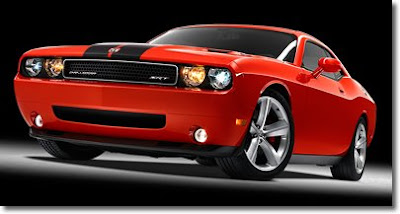
The U.S. MSRP for the 2009 Dodge Challenger SRT8 is $39,995 (including $675 destination). The 2009 Dodge Challenger SRT8 offers an available six-speed manual transmission or standard five-speed automatic transmission mated to the SRT-exclusive 6.1-liter HEMI V-8 engine that produces 425 horsepower (317 kW) and 420 lb.-ft. (569 N*m) of torque. New for 2009 is a standard limited-slip differential, High Performance Red and B5 Blue (late availability) exterior paint and black hood stripes. A classic "pistol-grip" shifter is included with the available Track Pak which includes the Tremec TR-6060 six-speed manual transmission with Hill-start Assist.

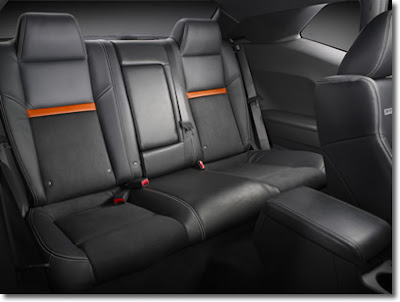
Other standard features on the 2009 Dodge Challenger SRT8 include a race-inspired interior featuring performance seats with a red accent stripe and added bolstering which keeps customers in place under spirited driving conditions, four-bomb gauges with tachometer and 180 mph speedometer in the center, "Performance Pages" reconfigurable display that features 0 - 60 mph, 1/4 mile, and 1/8 mile times, uconnect gps, unique SRT-tuned ESP and ABS calibrations, 20-inch fully-forged aluminum wheels, red, painted Brembo brakes, hood with functional dual hood scoops, functional black painted rear spoiler and a unique exhaust note.

Street and Racing Technology (SRT) is Chrysler's in-house performance engineering organization that focuses on five pillars for every SRT vehicle: bold exterior design that resonates with the brand image, a race-inspired interior, world-class ride and handling across a dynamic range, a standout powertrain and benchmark braking.

About the Dodge Brand

With a U.S. market share of 6.4 percent, Dodge is Chrysler LLC's best-selling brand and the sixth largest nameplate in the U.S. automotive market. In 2007, Dodge sold more than 1.3 million vehicles in the global market.

Specifications

Brakes & Tires

Brakes

Disc

Turning Diameter

38.9 ft.

Wheelbase

116.0 in

Wheels

20-inch

Engine

Compression Ratio

10.3

Displacement

370 Cubic Inches

Horsepower

425

Torque

420 lb.-ft.

Valvetrain

16

Exterior Dimensions & Weight

Overall Length (in)

197.7

Overall Width in

75.7

Performance

Fuel Economy Cty/Hwy

13/18

Base Price: $39,995


The Dodge brand's first crossover vehicle -- the all-new 2009 Dodge Journey -- is now available, and will be available outside North America in petrol and diesel powertrains in both left- and right-hand drive in mid-2008. The limited-edition 2008 Dodge Challenger SRT8 with a 6.1-liter HEMI(R) V-8 engine that boasts 425 horsepower and 420 lb.-ft. of torque hit the streets in the spring of 2008. Later in 2008, Dodge will add three more new vehicles to its product lineup -- the all-new 2009 Dodge Ram with game-changing exterior and interior design, innovations, best-in-class features and craftsmanship; the all-new 2009 Dodge Challenger, a modern interpretation of the American muscle car; and the 2009 Dodge Durango Hybrid, a hybrid-electric vehicle that combines fuel efficient advanced hybrid technology with full-size SUV performance and capability. Recently, the all-new 2008 Dodge Grand Caravan arrived in dealerships with 35 new or improved features including the newest innovation, the Swivel 'n Go seating system. In 2007, Dodge Avenger and Nitro entered key volume segments outside North America, joining the Dodge Caliber, which launched in those markets in 2006.

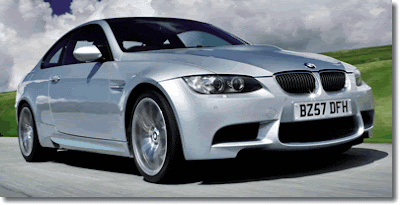
2009 BMW M3 Coupe


Entering each new season in motorsport, BMW feels new and fresh ambition, query formally proven recipes for success, and focus on new records and outstanding achievements. And precisely this also applies to the debut of the new BMW M3. Having completed its test cycle with flying colors, the new high-performance sports car from BMW M GmbH is ready and waiting to take over pole position. Indeed, with its superior power, performance and dynamism, the new BMW M3 ensures truly unique sheer driving pleasure of the highest caliber.

The new, 414 bhp V8 power unit offers enormous muscle and performance at all times. And the aesthetic design of the new car typical once again of BMW M spells out supremacy of the highest standard.

The new BMW M3 sets the foundation for continuing an exceptional career in motorsport. So every enthusiast sharing the passion for supreme performance may be sure that this model is able to master even the greatest challenge on and off the race track. And last but certainly not least, the new BMW M3 offers the supreme standard of reliability and everyday driving qualities so typical of all high-performance cars from BMW M GmbH.


Specifications

Brakes & Tires

Brakes F/R:

ABS, vented disc/vented disc

Tires F-R:

245/40 ZR18 - 265/40 ZR18

Layout

Front Engine, RWD

Engine

Displacement

4.0 Liters

Horsepower

420 hp

Redline at RPM:

8400

Torque lb-ft (Nm) at RPM:

295(400) / 3900

Type:

V8

Exterior Dimensions & Weight

Length × Width × Height in:

181.7 × 71.6 × 55.8

Weight lb (kg):

3648 (1655)

Performance

Acceleration 0-60 mph s:

4.6

Final Drive Ratio

3.85:1

Fuel Economy

14 mpg city/ 20 mpg highway

Top Speed mph (km/h):

155 (250) - electronically limited

Base Price $56,500


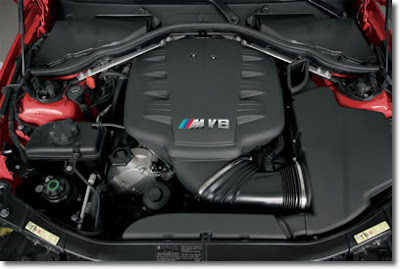
The First-ever Eight-cylinder to Power a BMW M3
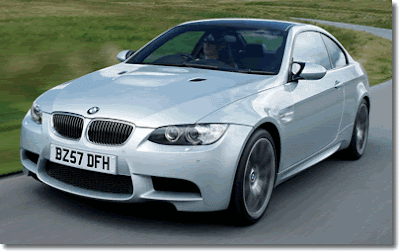
After 15 glorious years in the world of motoring, the straight-six power unit lauded time and again as the Engine-of-the-Year in the two former model generations of the BMW M3 is now giving way to a truly worthy successor. The new BMW M3 comes for the first time with an eight-cylinder power unit. And the specifications of this all-new high-performance engine clearly
prove the competence and skill of the engine development specialists at BMW M GmbH gained in a long history of racing success: Displacing 3,999 cc, the new V8 develops maximum output of 414 bhp, together with peak torque of 295 lb-ft at 3, 900 rpm. Perhaps an even more outstanding fact is that some 85 per cent of the engine’s peak torque remains available throughout the enormous speed range of 6, 500 rpm.

The eight-cylinder nevertheless owes its most striking and distinctive forte to the high-speed engine concept so typical of BMW M: Revving all the way to 8,400 rpm, the new power unit offers supreme muscle and performance at all times. Power is transmitted to the rear wheels by a six-speed manual gearbox interacting with brand-new final drive. This combination alone provides an acceleration and power potential reminiscent in its spontaneity and endurance to the dynamic potential of a thoroughbred racing car.


Athletic body design as a visible expression of superior power
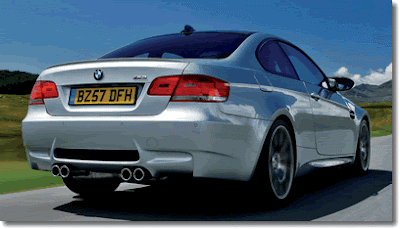
The exterior of the new BMW M3 was designed and developed from the start to give the car a truly unique and sporting look. So applying the principle of "form follows function”, the designers at BMW M GmbH, in giving the body of the car its particular look and appearance, have succeeded in finding a perfect match of supreme technology, on the one hand, and authentic sporting design, on the other.


Reflecting this clear-cut principle, the engine compartment lid made of aluminum features an impressive powerdome right in the middle. Together with the recesses right next to the powerdome providing space for additional air intake openings, this special design feature clearly hints to the supreme potential of the eight-cylinder power unit within the engine compartment. The contours of the powerdome and air intakes follow the forward-pointing arrow shape of the engine compartment lid, blending harmoniously into the overall design of the front end even longer than on the “regular” BMW 3 Series Coupe.


The Interior: Tailor-made for Optimum Driving Pleasure
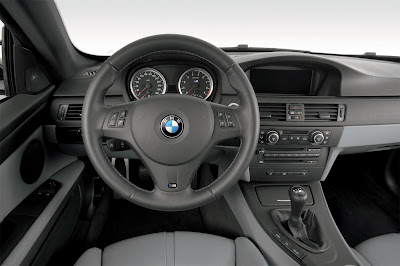
In designing the interior, the specialists at BMW M GmbH have succeeded in offering the occupants maximum driving pleasure in an ambience tailored to their specific needs and wishes. This applies particularly to the driver, with all controls and instruments relating directly to the active driving experience in the car adapted to the supreme performance of the BMW M3 and re-designed from the ground up wherever appropriate.


Double circular instruments with white illumination and red needles, the M leather steering wheel and the newly designed centre console all characterize the cockpit of the new BMW M3. The door cutout trim embellished by the characteristic M logo, the support for the driver’s left foot made of brushed metal, the special design and color of the inner door panels, as well as the trim strip made of high-quality, sophisticated materials exclusive to BMW M such as leather in carbon design or aluminum, all serve to underline the supreme and truly unique position of the new BMW M3.
MDrive Button for the Ambitious Driving Enthusiast
Enjoying the qualities of the new BMW M3, the driver is able to configure several driving parameters individually according to his particular requirements, thus adjusting the car’s behavior and performance to his personal preferences. One option, for example, is to completely deactivate the Dynamic Stability Control (DSC) via the car’s set-up. Electronic Damper Control (EDC), in turn, which optimizes both vertical vibration behavior as well as the car’s dive and roll in bends and when applying the brakes and accelerating by adjusting damper forces, comes with three different settings – Normal, Comfort, and Sports – the driver is able to pre-select at the touch of a button.

Three control maps are also available for precise, on-demand management of the engine. These management functions operate not only on the position of the throttle butterflies in the intake manifold, but also on further factors and parameters significantly changing the behavior and response of the engine.

The optionally available MDrive configuration enables the driver to pre-select the response of the Servotronic power steering. In the process, MDrive is able to follow two control maps varying steering forces between the Normal and Sports setting as a function of road speed.

2009 B&B Audi TTS Power Sportscoupe


2009 B&B Audi TTS Power Sportscoupe
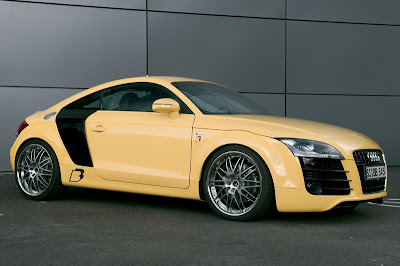
The Siegen-based Audi expert B&B perfects the actual version of the TT. Performance values, which normally are preserved by high class sports cars, can be reached in 3 different stages (306, 324 and 362 hp). The acceleration duration 0-100km/h is lowered to an enormous value of 4.6 seconds in the final stage - while maximum velocity level is on 280km/h. To reach these performance values, B&B mounts a special turbo loader, a sport exhaust system with a special pre exhaust system and a high performance sports catalyst as well as an electrical tuning, perfectly harmonizing with these components.

Additional to this, the air intake system and air cooling system gets prepared and replaced. To keep oil temperature on the right level, B&B offers a special slim-line oil cooling system, to meet the tuned engine's requirements perfectly.

To adjust the coupe's optics and "overtake-prestige" to the driving performance, B&B mounts an aerodynamic body kit in R8-style, which leads to sensations - perfect harmony of TTS' appearance and power.

B&B sport springs to lower the car's height by upto 40mm which also reduce its declination, are also available. A special Chassis, adjustable in height, pull and push stages, which allows higher turning speed is also orderable.

A delay to meet the risen driving, the B&B 8-stroke high quality breaking system can be ordered, that allows the TTS driver having a calming and safe feeling while driving. Exclusive Wheel sets in 19" and 20" finish the "Power-Audi's" appearance.

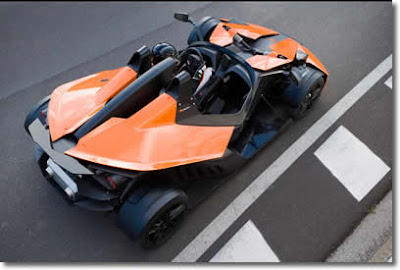
2009 KTM X-BOW Street


2009 KTM X-BOW Street
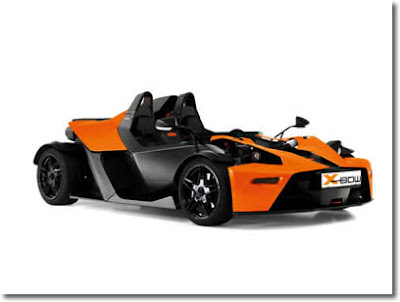
With its aggressive design and immense sporting potential, the X-BOW is a milestone in 50-year history of the KTM brand. At the same time it represents a new benchmark in the small but elite segment of radical lightweight sportscars. This exceptional achievement is the result of its highly original design concept and the fact that for its first car, KTM employed the finest materials, advanced technology and the know-how of respected development partners. The result is a street-homologated sportscar with pedigree motorsport technologies including a cutting edge monocoque made from carbon fibre, identical to those that have become standard in modern Formula 1, for example, because of its weight and safety advantages.

2009 KTM X-BOW Street
Thanks to the car's light weight and the 177 kW (240 hp) Audi 2.0 TFSI engine, the KTM X-BOW sets new performance standards and outstrips even far more powerful sportscars. Weighing in at around 790 kilograms, it accelerates from a standing start to 100 km/h in only 3.9 seconds. At the same time, low fuel consumption (7.9 litres/100 km) and exhaust emissions (187.23 g/km) rival those of powerful compact cars.

2009 KTM X-BOW Street
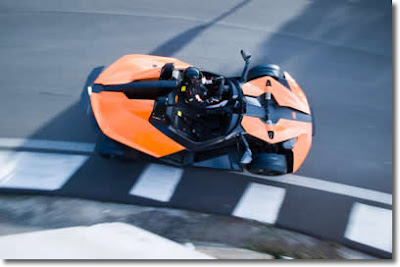
But the X-BOW isn't just a racing machine, even if it does achieve spectacular performance on the race track. With its modern technologies and exceptional dynamics, it's also oriented towards sporty drivers who seek a purist driving experience on the road. By foregoing electronic assistance and extraneous, heavy comfort features, the X-BOW offers an unfiltered driving adventure. This is made possible by the double wishbone suspension front and rear, the exposed mechanical components and the unadulterated concept that leaves the X-BOW without a roof, doors or a windscreen. The sportscar's only concession is a 70 mm high, transparent wind deflector. So driving the KTM X-BOW becomes an experience with an immediacy that otherwise can only be felt when riding a motorbike or driving a single-seater racing car.

For the 2009 model year, there is a new X-BOW product line-up with ownership of the new sportscar phenomenon from KTM starting at only 49,980 Euros (plus national taxes and import duties) for the X-BOW Street that, even with its basic configuration, offers the absolute maximum in driving pleasure.
The Street series features in detail

- Carbon fibre monocoque with crash box, both in clear coat finish
- Audi 2.0 TFSI engine with direct fuel injection and 177 kW (240 hp)
- Smooth racing underbody, front splitter and rear diffuser in aluminium composite
- Individually adjustable pedals and adjustable multi-function steering wheel
- 'Keyless Go' system
- Lacquered alloy wheel rims
- Four-point safety harness

Factory-fitted special options are also available: a removable steering wheel, limited-slip differential or street-homologated semi-slick tyres and of course a wide selection of KTM PowerParts.

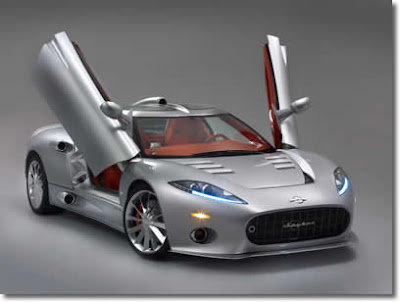
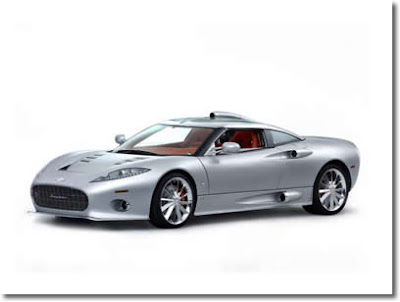
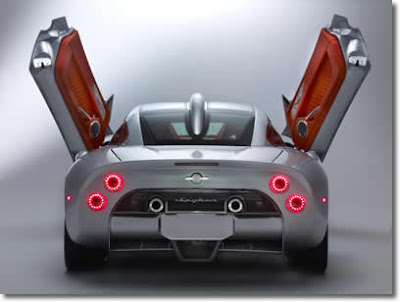
2009 Spyker C8 Aileron


2009 Spyker C8 Aileron
Spyker Cars, manufacturer of exclusive premium sports cars since 2000, today proudly introduces the production version of its all-new second-generation sports car: the Spyker C8 Aileron, the prototype of which was shown at Geneva in 2008.

Victor R. Muller, Spyker Cars’ founder and Chief Executive Officer said on the occasion of the unveiling: “When we unveiled the C8 Aileron prototype here last year, we wanted to make a clear statement to the industry that Spyker was about to take the next step in its short but intense history, by introducing its second-generation sports cars, developed from scratch. Within a year we transformed that prototype into the production-ready car we show here today. The first cars are being built now with customer production and deliveries starting in May 2009.

The C8 Aileron’s design is heavily inspired by Spyker’s aviation heritage, as was the case with all previous models, but with a clear emphasis on the second-generation aircraft propulsion: the turbine rather than the propeller that adorned so many elements of the first-generation cars. Similarly the “Aileron” name pays tribute to that aviation heritage.

It is the device that makes an aircraft turn and symbolizes the turning point that the Aileron is for Spyker: the car which will turn the company towards long-awaited profitability.”

2009 Spyker C8 Aileron
All-Aluminium Space frame Chassis

The Spyker C8 Aileron’s all-aluminium space frame was completely redesigned from scratch with the objective to increase torsional rigidity and to incorporate an all-new suspension system. These characteristics provide an ideal foundation for enhanced vehicle dynamics.

Moreover, the C8 Aileron’s dimensions have been optimised for more interior space and to accommodate the optional automatic gearbox. Compared to the short wheelbase of the firstgeneration cars - the Spyker C8 Laviolette and C8 Spyder - the wheelbase of the C8 Aileron is 150 mm longer, also providing for more driving comfort and stability at high speeds. Its front track has increased by 155 mm. The total dimensions of the front and rear track are now 1625 mm and 1645 mm respectively, which improves road handling significantly.

Spyker has put tremendous efforts in the space frame performance of the C8 Aileron, specifically the structure’s efficiency. The utilisation of modern finite element and numerical optimization methods has allowed Spyker’s engineers to arrive at an exceptionally stiff structure of 22.000Nm/degree. Rigidnode and load-path technology has been employed in order to ensure that the minimum amount of aluminium is used to achieve this performance, thus reducing the overall weight of the vehicle. The dynamic stiffness characteristics of the structure have been carefully tuned in order to minimize unwanted cabin noises and vibrations, which may otherwise detract from the driving experience. These technologies and measures have allowed Spyker to arrive at the most efficient chassis in its history.

2009 Spyker C8 Aileron
Design

The design of the hand-crafted Spyker C8 Aileron represents the latest evolution of Spyker’s signature architecture, which is prominently inspired by the company’s aviation heritage. In the first-generation cars, the propeller design was consistently applied to many elements of the cars. Within the design of the new Spyker C8 Aileron, the emphasis was shifted from the propeller propulsion to the turbine propulsion. As a result, for instance, the bright polished air inlets were converted into turbine-engineshaped air scoops.

In order to enhance the aerodynamic performance of the car, several changes in styling were made, such as stretching the canopy backwards. Most of the shark-like gills have been abandoned, which results in a cleaner, smoother appearance. The front end is now characterised by a larger grille that gives additional cooling. Also the rear diffuser was redesigned for improved functionality. An extra spoiler has been placed under the diffuser, providing additional downforce to boost the ground effect produced by the diffuser.

Sometimes practicality gains over design: the split side windows with the characteristic metal frame have been replaced by single-pane side windows that are fully retractable, improving driving comfort. The outside mirrors, standard in body colour, were redesigned and the mirror body is mounted on two turbine fan blades.

The rear lights are made of LEDs (light-emitting diodes). LED lights were also used for the indicators and the in the redesigned headlight units. The style of the headlights is particularly eyecatching as they follow the body design more closely. This characteristic styling can be defined as a part of the (future) Spyker identity first seen on the Spyker C12 Laturbie and subsequently in the Spyker D8 Peking-to-Paris. In fact, the latter will use the identical headlight units to those of the Aileron.

The C8 Aileron is available in 16 standard colours, but customers may choose any colour they wish as an option, as well as the Spyker Squadron GT2 colour scheme. The standard colours have been developed by Sikkens Autolakken Nederland and AkzoNobel Car Refinishes. Spyker selected these companies because of their high quality standards and their flexibility to meet with special requirements. Some of the standard colours have been created especially for the C8 Aileron.

Power train

The Spyker C8 Aileron will use the Audi 4.2 litre V8 engine, giving 400 bhp and will be available with two transmission alternatives. The first one is a 6-speed Getrag manual gearbox, with ratios perfectly matched to the V8 engine. This is joined by a ZF 6-speed automatic gearbox, which comes standard with paddle shifts behind the steering wheel, to progress smoothly through the ratios. Both transmissions retain Spyker’s trademark exposed gear change mechanism.

2009 Spyker C8 Aileron
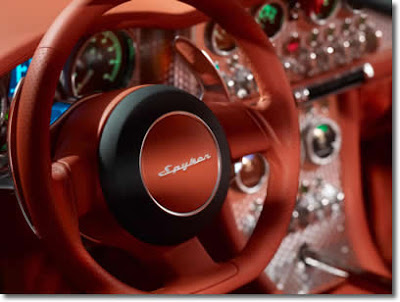
Interior

Thanks to the longer chassis, the Spyker C8 Aileron has more interior space, which results in a higher comfort level and improved ergonomics. The interior, with its typical attention to detail, is made of the highest quality leather, from the Litano range of the Dutch Royal Tannery Hulshof. The leather interior is available in 14 standard colours, but any other colour – if desired by the customer – can be ordered as an option.

Driver and passenger sit low, close to the car’s centre of gravity, where they can feel the car reacting to the input of the driver, for a direct and sporting connection between car and driver.

The dashboard was completely redesigned to suit the new Spyker identity and to improve ergonomics and functionality. Air vents are designed in turbine style and the performance and distribution of the air conditioning was improved significantly. A multifunctional LCD display is integrated between the speedometer and the odometer. The middle console accommodates the standard Kharma sound system (see In-Car Entertainment). Chronoswiss dials and switches are available as an option. More space was created around the Spyker characteristic floor-mounted pedal box. The impression of professional functionality and ergonomic styling is enhanced by the optimised positioning of the door handle and the hand-brake lever.

In-Car Entertainment

With larger numbers of cars going into the market and the increased popularity of the iPod and similar products, the demand for a standard sound system fitted by the factory increased. As a result, every Spyker C8 Aileron will be equipped as standard with a Kharma sound system, incorporating a digital radio, Bluetooth interface, an iPod connectivity and a navigation system. The Kharma sound system offers joystick controls on the central console and a dashboard display, paired to 6 Kharma loudspeakers. It can be extended with two optional audio packages.

The presence of a Kharma sound system in the Spyker C8 Aileron marks Kharma’s debut in the world of automotive entertainment. Kharma International produces high-end audio products and sells worldwide through a network of highly qualified distributors and dealers. All sound systems are developed, assembled and tested in the Netherlands, with the utmost care by a team of highly engaged specialists. These characteristics of high-quality products and exclusiveness are in line with Spyker’s brand values craftsmanship and exclusivity.

Suspension & Wheels
The C8 Aileron is fitted with a brand-new front and rear independent double-wishbone suspension system. The new suspension system includes a new kinematic layout of the front and rear suspension, front and rear stabilizer bars, mono-tube dampers, coil over damper steel springs, anti-dive and antisquat setup for improved handling properties. The suspension components are made of forged aluminium where possible, to keep the vehicle’s unsprung weight as low as possible. Shock absorbers are now placed vertically within the wishbones.

The Aeroblade™ wheels of the first-generation cars are replaced by newly-designed 19-inch alloy wheels. New 10-blade, 19-inch directional rotor wheels, branded Rotorblade™, are available as an option. These wheels are inspired by the turbine blades of a jet engine, which hints the new styling direction while respecting the aviation heritage. The 235/35 size tyres at the front and up to 295/30 at the rear provide the necessary road holding.

Brakes

Brakes are supplied by AP Racing, a partner from day one. Black brake calipers with Spyker script are standard. Colour-coded calipers with Spyker script can be ordered as an option. Carbon ceramic brakes will be available as an option soon.

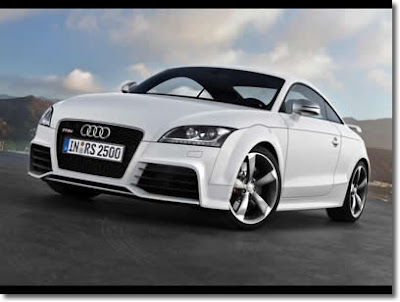
2009 Audi TT-RS


Audi is once again producing a five-cylinder engine – and a very special one at that. Arriving at dealerships this summer, the TT RS has a turbocharged 2.5-liter engine with direct gasoline injection; it produces 250 kW (340 bhp) and 450 Nm (331.90 lb.-ft.) of torque. The blazing five-cylinder engine enables the TT RS to perform extraordinary feats. In conjunction with quattro permanent all-wheel drive and a high-performance chassis, the engine makes the compact Audi TT RS a top-notch sports car – available as a coupé or roadster.

Sporty five-cylinder gasoline engines have a long legacy at Audi. The most famous is arguably the turbocharged 2.1-liter engine in the Audi quattro. The first version, which was launched in 1980, offered an impressive 147 kW (200 bhp). And the Sport quattro from 1984, directly inspired by motorsport, delivered a whopping 225 kW (306 bhp). For 25 years, turbochargers and quattro have been a dynamic formula for success.

Audi has resumed using this recipe. Designed from scratch, the five-cylinder engine combines a turbocharger with FSI direct gasoline injection to elevate the TT RS to a high-performance sports car. The TFSI delivers 250 kW (340 bhp) from a displacement of 2,480 cc (151.34 cu in): a specific output of 100.8 kW (137.1 bhp) per liter.

The power-to-weight ratio is also outstanding. In the case of the Coupé, which weighs in at a mere 1,450 kilograms (3,196.70 pounds), the power-to-weight ratio is just 4.3 kilograms per bhp.

The TT RS Coupé rockets from 0 to 100 km/h (0 to 62.14 mph) in 4.6 seconds; the Roadster needs just a tenth of a second longer. The limited top speed of 250 km/h (155.34 mph) is merely the official figure for both versions; as an option, Audi can increase it to 280 km/h (173.98 mph).

Almost even more impressive is the aggressive pulling power. The maximum torque of 450 Nm (331.90 lb.-ft.) is always available between 1,600 and 5,300 rpm. In addition, the TT RS overtakes without the slightest effort. Last but not least, its engine makes passengers’ skin tingle time and again thanks to its speedy and powerful response, its inspiring free-revving character, and its unmistakably guttural tailpipes: five-cylinder classical music by Audi!

Compact and Lightweight: The Five-cylinder TFSI

As an uncompromising sports-car engine, the 2.5-liter TFSI is ultra-compact. Just 49 centimeters (19.29 inches) in length, it is ideally suited for transverse installation in the TT RS. And its weight of just 183 kilograms (403.45 pounds) also sets a record. The crankcase is made of vermicular-graphite cast iron. This high-tech material unites the utmost in strength with low weight; it has otherwise only been used for the large TDI engines from Audi. Perfectly placed reinforcements enhance the block’s loadability. The lightweight cylinder head, the pistons, and the connecting rod are lightweight as well as high-strength.

The ultra-powerful five-cylinder engine is extremely fuel-efficient, requiring an average of just 9.2 liters/100 km [25.57 mpg] as regards the Coupé (Roadster: 9.5 l/100 km [24.76 mpg]). Switchable flaps in the intake manifold mix the incoming air in a calculated configuration. Injected at a pressure as high as 120 bar by the common-rail system, the gasoline swirls intensely in the combustion chamber – which in turn cools the walls. This subsequently facilitates a compression ratio of 10.0:1, which is very high for a turbocharged engine. Both of the adjustable camshafts, controlled via chains, also enhance charging efficiency with respect to the air-fuel mixture.

The large turbocharger generates up to 1.2 bar of boost pressure. The intercooler, fed air ideally by the lower segment of the single frame radiator grille, reduces the temperature of compressed air by over 80 percent at full load.

When an Audi TT RS driver pushes the standard Sport button on the center tunnel, a flap installed in the left exhaust tailpipe renders the exhaust noise even more robust and intense while boosting engine responsiveness. An optional Sport exhaust system is available with matt black tailpipe trims and sound flap.


For Purists: The Driveline

The Audi TT RS is the first classic sports car in the Audi RS family. Like the RS 4 and the RS 6, the Audi TT RS was developed by quattro GmbH as a pure, no-holds-barred driving machine. A new six-speed manual transmission conveys the engine’s tremendous power, and permits easy and precise operation thanks to a specially designed shift lever boasting particularly short shift travel. The transmission’s defining characteristics are a high efficiency ratio and a sportily narrow spread of the gear ratios.

The Audi TT RS features quattro permanent all-wheel drive as standard equipment. Its heart lies at the rear axle: an electronically controlled, hydraulic multi-plate clutch. If a situation calls for it, the clutch redirects a majority of the torque input from the front wheels to the rear wheels.

Within milliseconds, a powerful electrical pump in conjunction with an accumulator presses together the clutch’s plates via hydraulic pressure. Additions to the quattro powertrain include a constant velocity joint before the propeller shaft and a compact rear-axle differential – both are heavy-duty components.

The quattro drivetrain grants the Audi TT RS outstanding traction, fascinating dynamics, and superb stability. Winding rural routes or some laps around a racetrack allow the superior handling to shine. The precise and responsive steering, the instantaneous reactions of the chassis, the neutrality at the cornering limit, the grip while exiting a curve, and – time and again – the engine’s thrilling power: every mile in an Audi TT RS exudes the distilled essence of sportiness.

High-tech Excellence from Audi: Chassis and Body

The chassis of the Audi TT RS builds on the cutting-edge foundation of the base TT design. The four-link rear suspension, which handles longitudinal and lateral forces separately, plays a crucial role. The electromechanical steering is highly efficient and the power steering adjusts to the vehicle’s speed. With aluminum in the front and sheet steel in the back, the body’s innovative mixture of materials results in a well-balanced axle-load distribution, excellent crash safety, and the outstanding rigidity which lays the cornerstone for the car’s precise handling.

The standard sports chassis, which lowers the body by 10 millimeters (0.39 inches), features tightly tuned springs and shock absorbers. The optional Audi magnetic ride adaptive damping system allows the driver to select one of two modes for the shock absorbers by simply pushing the Sport button. Dynamic mode enables the TT RS to hug the road; Comfort mode provides a pleasantly balanced ride perfect for long journeys.

The sportiest version in the TT model line boasts 18-inch wheels fitted with 245/45 tires. They are complemented by mighty ventilated disc brakes, which measure 370 millimeters (14.57 inches) in diameter at the front and 310 millimeters (12.20 inches) at the rear. So that heat dissipates quickly, the front friction rings are perforated. They, in turn, are connected by hollow pins to the aluminum brake discs, which are encircled by black four-piston brake calipers made of aluminum and bearing RS logos.

The Electronic Stabilization Program (ESP) can be switched off partially or entirely. In Sport mode, the engine does not intervene to monitor traction and, correspondingly, the brakes engage later than otherwise. In the second mode, the ESP is fully deactivated.

The Face of Power: The Exterior

At just 4.20 meters (13.78 feet) in length, the vigorously compact Audi TT RS hints at its explosive potential from the very first glimpse. The front spoiler tapers downward into a splitter, reminiscent of a racing car. The large and squared air inlets have diamond-shaped inserts. And the high-gloss black single frame grille with a frame in matt aluminum look and the TT RS badge bear the same styling. The xenon plus headlights with LED daytime running lights notify faraway drivers that an Audi TT RS is approaching.

The sides of the vehicle are accentuated by large wheels in 5 twin-spoke design, vigorous side sills, and exterior-mirror casings in matt aluminum look. At the tail end, the two large oval exhaust tailpipes – spaced apart – are encircled by a diffuser insert. Here, too, is a TT RS badge. A stationary rear spoiler is standard, though customers can opt for one which automatically extends and retracts. Thanks to a drag coefficient of just 0.3, the 2+2-seat coupé and the two-seat roadster glide effortlessly through the wind. Audi offers the TT RS in eight colors. Among them are four exclusive options: Daytona Gray, pearl effect; Mugello Blue, pearl effect; Sepang Blue, pearl effect; and Suzuka Gray, metallic. The Roadster’s soft top comes in black or dark gray.


Exclusive Character: Interior and Equipment Packages

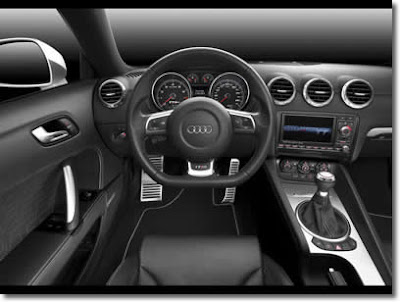
The dynamic exterior of the Audi TT RS is matched by the interior. The leather multifunction sports steering wheel has an especially thick rim, is flat-bottomed, and is covered with perforated leather. Integrated in the instrument panel, the driver information system can display boost pressure and oil temperature as well as a lap timer for chronicling feats at the racetrack. The door handles consist of two slim strips – typical of Audi RS models. An automatic climate-control system and the concert sound system are standard, as are an electrohydraulic soft top and an electric wind deflector for the Roadster.

The entire interior is black. The heated sports seats feature an Alcantara/leather combination with silver contrasting stitching and embossed TT RS logos in the front backrests. Additional badges and logos appear on the steering wheel, in the rev counter, and on the door sill trims. The inlays are made from brushed aluminum. Floor mats feature silver piping trim; footrests and pedals are in aluminum look.

Audi offers TT RS customers a diverse range of optional equipment: variably styled wheels measuring 18, 19 or 20 inches in diameter; bucket seats with folding backrests; seat upholstery in Silk Nappa leather with perforations or Fine Nappa leather with special TT perforations; inlays with Ibis White or Phantom Black paint finish as well as matt aluminum-look inlays for the exterior. In addition, there are high-tech navigation and multimedia systems available. Sales of the Audi TT RS begin in March; deliveries are scheduled to begin this summer.

2009 SMS 570 CHALLENGER


2009 SMS 570 CHALLENGER
Late last Friday night, automotive icon Steve Saleen and his new company SMS Supercars launched the production version of the SMS 570 Challenger to media and customers. The lifestyle unveiling at “Tentation” nightclub in Newport Beach proved to be the perfect venue for the automotive enthusiast audience. “We have an exciting new vehicle and wanted to
shake up the old standard introduction at an auto show” explains Steve Saleen.

2009 SMS 570 CHALLENGER
After its late night launch the SMS 570 Challenger began its lengthy tour to numerous US destinations and Dodge dealerships. First stop last weekend was the Barrett-Jackson auction in Scottsdale, AZ, where it was on display for attendees to admire.

“Scottsdale was just a stopover en route to the NADA Convention in New Orleans”, notes Steve, “I will present the car to Dodge dealers at the convention January 24-27”. The car will then continue on to a number of locations in the South East where it will be shown to customers and dealers. A US press tour with both production models will follow at the end of the first quarter of 2009.

2009 SMS 570 CHALLENGER
The 500 HP SMS 570 Challenger and the 700 HP SMS 570 X Challenger can be ordered through all Dodge dealers at this time. In addition to the patented SMS Supercharger atop the ultra high-performance engine, both production models feature completely revised aesthetics, aerodynamics and performance features including; SMS Series 4 suspension and high performance cross drilled brakes with six pistons up front and four pistons at the rear.
The interior features the SMS Signature Series chevron seats with deep bolsters, rich leather and Alcantara suede for high-performance comfort. Aerodynamic features include a front fascia with high volume radiator intake, a “GTX” inspired front grille, a high downforce front splitter with intercooler ducting, side skirts with rear brake ducting, a vented rear fascia with an extended blackout taillight surround, a high downforce rear diffuser and rear spoiler, as well as Steve Saleen’s new signature SMS Red ButterflyTM Dual Side Induction Hood. SMS 570 Challenger pricing starts at $64,870.00.

2009 Porsche 911 GT3 RSR


2009 Porsche 911 GT3 RSR
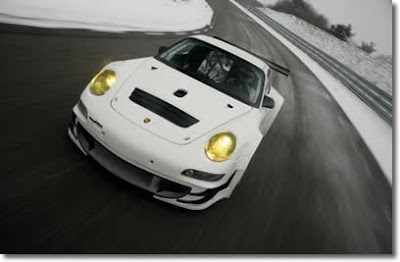
Stuttgart. The successful Porsche 911 GT3 RSR takes off into the new model year with extensive modifications. The most powerful race car based on the Porsche 911, which last season secured wins in the American Le Mans Series and at the Nürburgring 24 Hours, competes in the GT2 class at international long distance races. The most distinguishing feature of the new GT3 RSR is the redesigned front with large air outlets on the front hood. Under the light-weight bodyshell, as well, major changes were made to the quickest 911.

2009 Porsche 911 GT3 RSR
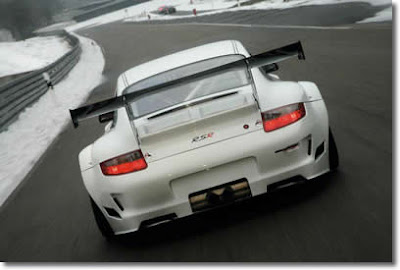
Noticeable at first sight are the air outlet slots, or the so-called louvers, on the front hood: an indication of the completely redesigned air ducting of the radiators, which became necessary through the new design of supply and discharge air with the installation of an optional air-conditioning unit. The aerodynamics under the rear underwent further optimisation. The rear wing now features a wider adjustment range. The weight-optimised brake system and the lighter wiring harness contribute to further improved handling, compared to the predecessor model.

2009 Porsche 911 GT3 RSR
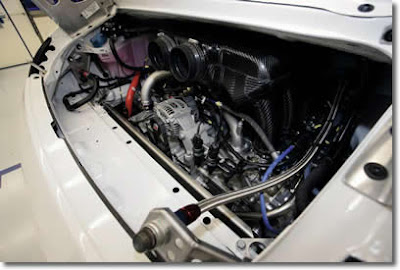
The capacity of the well-known six-cylinder boxer engine increased from 3.8 to 4.0-litres. After another reduction in the size of the air restrictors for the 2009 season, the engine now delivers around 450 hp (331 kW) at 7,800 revs per minute and develops a maximum torque of 430 Nm at 7,250 rpm. The rev limiter of the efficient six-cylinder unit kicks in at 9,000 rpm. Compared to the forerunner, the rev level for a given power output was significantly lowered. Thanks to this, the engine features an optimised torque curve and offers better driveability.

2009 Porsche 911 GT3 RSR
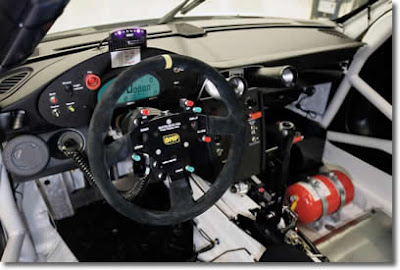
In the cockpit, a new multi-function display located above the dashboard indicates the opti-mum moment to change gears. Another new feature is the programmable multi-function, onboard supply system control device, giving teams the choice of many individual functions. One of these is the infinitely adjustable blinking frequency of the lights in the front apron, which helps to immediately recognise race cars when they enter the pits in the dark. For eas-ier servicing under race conditions, other modifications were made. The GT3 RSR now fea-tures a new air-jack system with overpressure valve. The oil refill with fast filling function has now moved to the rear lid, giving mechanics better access.

Aside from GT3 Cup and the GT3 Cup S, the GT3 RSR is the third race car based on the Porsche 911 offered by Porsche Motorsport. About 20 of the successful long distance racers have been built in Weissach and are now being delivered to customer teams around the world. The GT3 RSR costs 380,000 Euro plus VAT specific to each country.

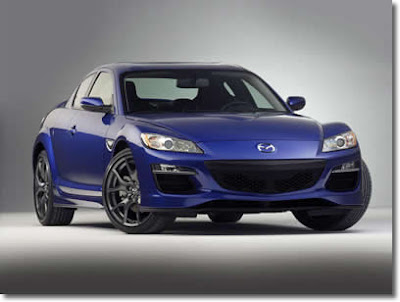
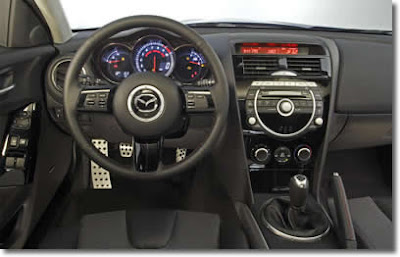
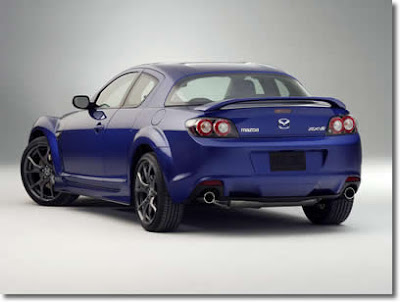
2009 Mazda RX-8


Launched in 2003, the Mazda RX-8 hit the global market with a serious bang. For 2009, Mazda will further the evolution of the four-door, four-seater sports coupe, giving RX-8 a refreshed exterior and interior design, enhanced performance and a new R3 sport package for the ultimate driving enthusiast.

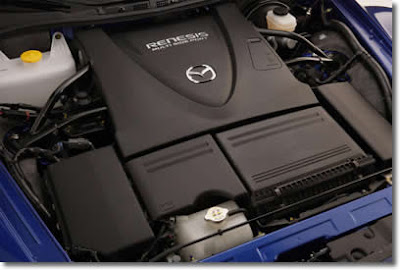
Unchanged is the core of the RX-8 - a high-powered, lightweight and perfectly balanced machine powered by the world-renowned twin-rotor RENESIS rotary engine.

To enhance the highly successful RX-8, Mazda engineers focused on innovation in three key areas for the 2009 RX-8: styling, performance and packaging. "The enhancements made to RX-8's exterior, interior, packaging and performance takes it to a whole new level of visual and driving excitement," remarked Nakazawa.


RX-8 was designed with an athletically sculpted exterior that provides a sense of originality that's unrivaled in the marketplace today. For 2009, RX-8 receives design enhancements that are meant to freshen the styling and give RX-8 a new look, without impairing the basic design theme. Refinements for the 2009 model year include restyled front and rear bumpers and front fascia; sporty, high quality finish front and rear headlamps; and larger exhaust pipes (now measuring 90 mm across). The 2009 RX-8 also offers a new five-spoke wheel design featuring a symbolic and sporty design reminiscent of the rotary engine, with different arrangements for each wheel size.

Taut muscular lines give RX-8 the liberating look of an athlete in motion. The muscular styling maintains classic sports car proportions while adding a Zoom-Zoom edge that is unmistakably Mazda.


Through-and-through, the RX-8 is a pure sports car that gives the driver an exciting and dynamic experience. For 2009, engineers improved RX-8 body rigidity through the addition of structural reinforcements, by adding a trapezoidal strut tower bar and enhancing the local rigidity of the front suspension tower areas. Also, the rear suspension geometry has been reconfigured for better handling performance and driveshaft rigidity is improved, lowering NVH levels and improving performance.

In addition, the differential gear ratio on manual transmission-equipped cars is lowered from 4.444 to 4.777 for improved off-the-line performance. While minimal, these performance changes give RX-8 increased acceleration and performance, as well as even greater responsiveness to the accelerator pedal - always a rotary-engine and RX-8 hallmark.

To achieve this sophisticated dynamic, Mazda utilizes the advanced RENESIS (Rotary Engine genesis - or rebirth of the rotary engine) engine. The Mazda RX-8 remains the only mass-produced rotary-powered passenger car in the world. While exhibiting unusually high power output for a naturally aspirated engine, RENESIS outstrips comparable reciprocating engines in terms of acceleration, the feeling of power in reserve and quick response.


The 2009 Mazda RX-8 is available as either a 232-horsepower model fitted with a six-speed manual transmission, or a 212-horsepower model fitted with a six-speed Sport A/T automatic with steering-wheel-mounted paddle shifters for a Formula 1-style driving experience.

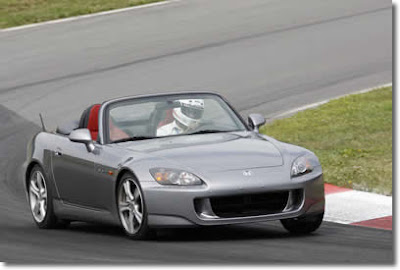
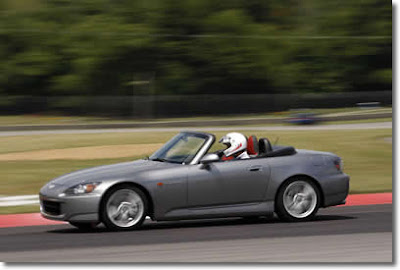
2009 Honda S2000


Widely considered the quintessential roadster-style sports car, the S2000 is the performance icon for the Honda brand and combines uncompromising racetrack-ready performance with everyday usability. As a true sports car that can serve as a practical and fun daily driver and also feel equally at home on a racetrack, this concept is further evolved with a club racer-inspired S2000 CR trim, first offered in the 2008 model year.

The S2000 rewards driving enthusiasts with a potent 237 horsepower, 2.2-liter, 16-valve DOHC VTEC® 4-cylinder engine and a precise, short throw 6-speed manual transmission, along with tenacious handling and a perfect 50/50 weight balance. The S2000 includes an electronic Drive-by-Wire (DBW) Throttle System,, Vehicle Stability Assist (VSA®), Maintenance Minder, system, standard headrest speakers, an outside temperature gauge and an engine start button. Air conditioning and an AM/FM/CD audio system are standard equipment on the S2000, optional on the S2000 CR for weight savings.

"The Honda S2000 is a true performance vehicle that provides customers with an exciting experience behind the wheel," said John Mendel, executive vice president of American Honda Motor Co., Inc. "Because the S2000 is a car designed by enthusiasts for enthusiasts, it can easily satisfy daily driving needs without sacrificing track-worthy performance."

The S2000's renowned high-revving, 2.2-liter, 16-valve DOHC VTEC 4-cylinder engine remains the pinnacle of naturally aspirated performance technology, delivering 237 horsepower at 7,800 rpm and 162 lb-ft. of torque at 6,800 rpm. Perfectly complimenting the engine's output characteristics is a compact, longitudinally-mounted, close-ratio 6-speed manual transmission that features a direct linkage for precise shifting and quick throws.

The S2000 comes equipped with a Drive-by-Wire throttle control system eliminating the need for a mechanical connection between the throttle pedal and the engine. This enables continuous electronic monitoring and adjustment of throttle pedal sensitivity to create an ideal match between throttle response and driving conditions. The system also manages the S2000's cruise control function for greater precision.


Honda's VSA makes the S2000 more stable and forgiving during street driving or in inclement weather conditions. Working in concert with the Drive-by-Wire system, VSA continuously monitors yaw rate, steering input, throttle input, and braking pressure to determine if the car is following the driver's intended path, and can independently coordinate each of the disc brakes through the 4-channel anti-lock brake system, along with the throttle, to enhance vehicle stability. While this serves to effectively enhance driver control during acceleration, braking, and cornering, the system can be disabled with the touch of a button when conditions warrant it. To help provide optimum stopping power, the braking system also features Electronic Brake Distribution (EBD) and Brake Assist.

The S2000's rear-wheel-drive chassis and powertrain layout results in a 50/50 front/rear weight distribution for perfect balance when cornering, while its hybrid monocoque body and "high X-bone frame" results in exceptional structural rigidity. Combined with a front and rear double wishbone suspension, precise electric power steering, and a torque-sensing limited slip differential, the end result is a complete, no compromise performance package for the enthusiast driver.

The S2000 has dual-stage, dual-threshold front airbags (SRS) for the driver and passenger, three-point seat belts with load limiters and automatic tensioning system, roll bar hoops and reinforced windshield posts. For pedestrian safety, the hood hinges and windshield-wiper pivots are designed to collapse and help minimize the severity of a head injury to a pedestrian.

Standard features for the S2000 include a power retractable convertible top, 17-inch aluminum alloy wheels, leather trimmed seats and High Intensity Discharge (HID) headlamps with daytime running lights. An aluminum hardtop and XM® Satellite Radio are available as dealer installed options.

S2000 CR

The lighter, stiffer and more aggressive overall design of the S2000 CR is engineered to maximize the S2000's potential on a racetrack with the goal of substantially-improving track times, chassis balance and feel. Compared to the S2000, the factory-tuned suspension on the S2000 CR provides more aggressive track-oriented settings, increased body and chassis rigidity, overall weight reduction, and aerodynamic spoilers tuned for reduced lift and enhanced chassis balance at high speeds. A removable aluminum hardtop replaces the convertible soft top.

The aerodynamic package reduces lift through large and specially-tuned front and rear spoilers. Exclusive chassis features include a quicker steering ratio, more aggressive Bridgestone Potenza RE070 tires (in place of RE050 tires), a larger rear tire size, firmer springs and dampers, larger stabilizer bars and a darker shade of gray on the wheel design. A rear body brace occupies the area previously occupied by the soft top on the S2000, resulting in additional rigidity on the S2000 CR. Relative to the base S2000, cumulative weight savings total 51 pounds (hardtop installed) and 99 pounds (hardtop removed). A sport-tuned muffler adds to the vehicles heightened performance feel. To save weight, air conditioning and an AM/FM/CD audio system are only available as factory-installed optional equipment.


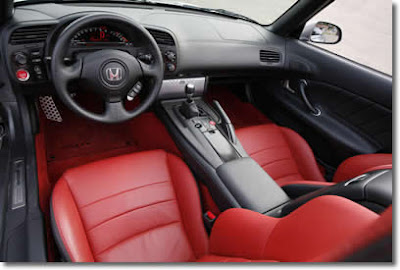
The S2000 CR interior follows traditional racecar themes. Fabric seating surfaces with yellow stitching help create a sporty appearance while synthetic suede bolsters enhance lateral grip. An exclusive spherical aluminum shift knob on the S2000 CR resides 12.6 mm lower for a 6 percent reduction in shift stroke compared to the conventional S2000 cylindrical shift knob (aluminum/leather wrapped). Additionally, shift load effort increases by 10 percent for even more direct feedback when engaging a gear. The S2000 CR instrument panel meters include a "peak-power indicator." When the engine is operating at peak power, a round, green light illuminates to the right of the digital speedometer.

The design and engineering concept for the S2000 is to deliver race-car-like performance and handling-something an enthusiast driver could use and enjoy, even in everyday driving situations. In addition, the S2000 is intended to be a modern, socially-responsible automobile with low emissions. The S2000's roadster layout also captures the spirit of the legendary high-performance sports cars of the past, as well as Honda's very first sports car, the S500 roadster. However, the S2000 makes no attempt to be a retro sports car. It is a unique, Honda interpretation of a modern sports car - with high performance, state-of-the-art technology, style, and Honda durability, quality and refinement.

For 2009, the S2000 is available in six colors, including, Laguna Blue Pearl, Chicane Silver Metallic, New Formula Red, Rio Yellow Pearl, Berlina Black and Grand Prix White. The S2000 CR is available in four colors: Rio Yellow Pearl; Grand Prix White; Berlina Black; and the CR exclusive, Apex Blue Pearl.

Get Everything @ Everythings4 | Make Money Ideas @ Google Junction Make Money By Google Blogger Templates By Blogger Templates 4u Designed By Ritesh Patel

Back to TOP